|
Getting your Trinity Audio player ready...
|
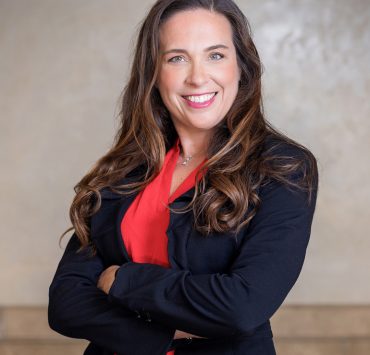
Change in retail never shows up neatly. Labor availability fluctuates, policies shift with little warning, and decisions ripple across thousands of stores at lightning speed. Legal teams are right in the thick of it. They turn uncertainty into guidance, helping the business take action while staying aware of risk. At The Kroger Co., Anitra Walden-Jacobs steps into that space, where workforce realities meet legal insight.
As corporate counsel, Anitra is part of a six-attorney team supporting labor and employment matters for more than 400,000 associates across the entire company. Anitra also supports the Company’s immigration compliance efforts and offers guidance on loyalty and rewards programs.
“I’m a people person. I love interacting with people. That’s where I fill my cup, feeling like I’m helping others,” she shares. Legal guidance needs to work in real situations, not just in theory.

Unexpected path
Anitra never set out to become a lawyer. She started college aiming to be a veterinarian, but the demands of pre-veterinary courses – especially the heavy math – made her rethink her plans. “I don’t think I’ve ever worked so hard for a C minus in my entire life. I realized I might end up hurting more animals than I helped if I kept going,” she admits.
As she weighed her options, her mother, a lifelong educator who always encouraged Anitra to choose her own path, made one thing clear: she didn’t recommend teaching. That was enough. “Out of sheer fear, I just said, I think I’ll go to law school,” Anitra recalls.
She attended Wittenberg University and Tulane Law School, finishing her degree at the University of Cincinnati. Early on, she dove into workers’ compensation litigation, taking the lead in hearings while most young attorneys were still watching from the sidelines. “You get in there right away. You are immediately doing hearings, which are like mini trials,” she explains. That experience shaped her approach, demanding quick thinking and firsthand problem-solving.
Mentors soon steered her toward labor and employment law. The shift matched her instincts and values. “It is very important to me to feel like I can navigate that field, making sure that I’m not seeing people being marginalized and trying to help,” she shares. At Jackson Lewis, her work expanded in scope and intricacy, bringing a wider range of clients and regulatory challenges.
She next moved in-house at Speedway, shifting from external counsel to direct business involvement and forging internal partnerships. “I value relationships and building them. That’s where my strength is,” she says. Her position grew more proactive over time. “People were asking my advice before we signed the paperwork, which was great,” she says.
Integrated role
At Kroger, Anitra works within a structure built for a national operation. Each division has separate leadership, so coordination is essential to keep things consistent across the enterprise. A dedicated labor relations group bridges the business and its workforce. “That group helps us understand strategically what we are seeing across the enterprise and what the plan is,” she explains. Maintaining alignment takes constant attention. “It can get disjointed very quickly when you have a workforce this large,” she observes.
Anitra focuses on inclusion early in the process. “I’m very big on bringing everybody under the tent that needs to be brought in,” she says. She looks for gaps. “Whose voice is not at this table?” That question drives her decision-making, which often spans legal, HR, operations, and compliance. The pace of retail adds pressure. “Retail moves very quickly because what’s on the shelves today is not good enough tomorrow,” she explains.
Her role is to make sure the right input comes in before decisions are final. “The worst case is when you are all the way down the line and realize you cannot move forward because you did not get the information or approvals necessary beforehand,” she says.
Her work has shifted toward anticipating issues rather than reacting to them. “I’ve gotten much better at saying, here is the risk now and here is the risk going forward,” she shares. Business partners expect more than risk statements. “What they want to know is, what happens if I do this, and what does it look like in six months,” she continues. Her answer almost always includes options. “You need plan B and plan C. You need to see further down the road,” she advises.
Workforce focus
Immigration law now forms a significant part of Anitra’s remit. Managing work authorization and compliance with associates across dozens of states adds real legal exposure, requiring close coordination across legal, HR, and operations.
Her role centers on helping the business work through that complexity while keeping associates supported. What stands out to her is how teams respond in practice. “What has been really uplifting for me is how hard I’m watching our management, from store level all the way up, really fight for their people,” she says.

That response informs how she views the broader purpose of her work. “At the end of the day, I work in an office in Cincinnati, but it is the cashier bagging groceries in Tennessee that pays my bills. It is important to take care of them,” she says.
As requirements evolve, clarity and coordination become critical. Anitra helps teams understand what actions mean in practice, ensuring decisions translate consistently across divisions without slowing the business’s pace.
Decision ownership
Anitra leads with a clear expectation of ownership. She encourages business partners to make decisions within defined boundaries, rather than defaulting to legal for every call. “Everything is not a legal decision,” she says. To support that, she builds confidence through structure. “Sometimes it was creating a process map so they could see, like, here is the map. I will sign off on it up to this point. That is all you. You have got this,” she says.
She pushes teams to move beyond identifying problems. “It’s great to point out the problems, but please come up with some suggestions on what we’re going to do,” she says. Her approach carries through in how she mentors junior lawyers. “You treat the doorman the same way as you do the CEO,” she says. She highlights clarity in communication. “Tell good news fast, but bad news faster.” She addresses mistakes directly, framing them as part of the work rather than something to hide. “The cover-up is always going to be worse than the crime,” she says.
Her view of success has evolved, too. “When I left law school, I think I just defined success as working at a big firm, making all this money,” she says. That has shifted. “Now I just define it as being happy. If I come home and my kids are healthy and happy and my husband and I actually like each other, that’s success.”
She returns often to a philosophy that keeps her grounded: “There are glass balls like family and love, and then there are rubber balls like money and what you do for work. The rubber balls will bounce. The glass balls will shatter. Sometimes, you are going to drop a ball. Just make sure it’s one that bounces back.”