|
Getting your Trinity Audio player ready...
|
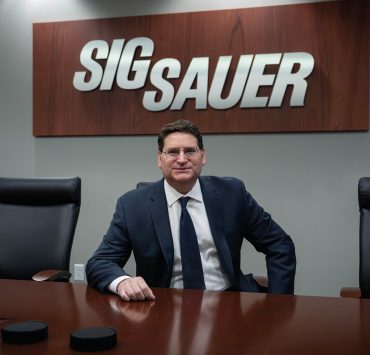
Solar supply chains move across jurisdictions that apply different trade rules, labor standards, and enforcement practices. For companies operating at scale, shipments can be delayed at borders, contracts can shift with changing tariffs, and regulators can redefine expectations with little notice. In that environment, legal teams do more than interpret rules. They shape how the business operates within them. At LONGi Solar, Luke Tillman, General Counsel for North America, works at that intersection.
Luke leads legal and trade functions that connect supply chains, contracts, and regulatory obligations across regions. His role carries weight because compliance delays ripple beyond the legal function. They affect delivery schedules, revenue, and relationships with customers and suppliers. That scope reflects the evolution of his position after joining the company.
He joined LONGi to lead global trade, attracted by the scale and complexity of the work. “The issues that a solar company faces span its entire supply chain,” he notes. As enforcement ramped up across renewable energy markets, trade became central to legal risk. “The role quickly grew to a point where it became an important compliance issue, then moved to an important legal issue. The transition just made sense,” he reflects. That shift expanded his mandate to include both trade and broader legal oversight.
Luke’s path to law started early. “I thought about becoming a lawyer for the first time when I was in elementary school.” He kept his focus on that goal while playing sports. He attended Kent State University, where he played football and prepared for law school. Later, he earned his Juris Doctor from Case Western Reserve University and an LLM in international trade from Georgetown.
He deliberately chose government roles. “I wanted to work in international trade, a decision I made right after law school,” he remembers. He worked for the US Department of Justice and across agencies like Customs and Border Protection and the US International Trade Commission, where he leant how regulators think and act. Today, that experience shapes how he builds compliance at LONGi.
“By most measures, LONGi is the largest solar company in the world,” Luke observes. The company manufactures wafers, cells, and modules, with a footprint spanning China, Southeast Asia, and North America. LONGi controls many stages of production, giving it visibility across inputs and exposing it to different regulatory regimes. “Having that level of integration allows us to be highly specialized when it comes to dealing with certain markets and regions,” he adds.
Rethinking trade compliance
One of the first tests of Luke’s approach came through enforcement of the Uyghur Forced Labor Prevention Act. The policy triggered shipment detentions across the solar sector, as companies struggled to provide documentation that satisfied regulators. Containers sat at ports for months, disrupting delivery timelines and increasing costs. Luke reviewed the situation from the inside. He analyzed workflows, documentation practices, and how the team worked with regulators. What he found wasn’t noncompliance – it was confusion. He told his team, “The good news is your documents actually demonstrate compliance, but the way we’ve been putting them together and presenting them to the government is confusing.”
He changed how the team worked. They shifted from collecting documentation to auditing it, focusing less on gathering records and more on analyzing them with the regulator’s perspective in mind. He also reached out to US Customs and Border Protection and asked, “Will you tell us everything that we’ve been doing wrong?”

That approach reset the relationship. Instead of putting LONGi at odds with the regulator, he aligned internal processes to match how reviews actually work. “We needed to prepare materials in a way that made sense internally, knowing they would be reviewed by another team using the same framework,” he remarks.
The impact became clear in how shipments moved, as container backlogs gave way to steady releases. The shift also changed how the team approached compliance. “I saw not just change, but real excitement,” Luke says.
Shaping supply decisions
Beyond immediate responses, Luke focuses on anticipating regulatory shifts. He treats policy changes as signals that can inform current decisions. “We started thinking about how to strategically plan for what’s to come,” he reflects.
That approach shaped how LONGi prepared for an audit tied to tariff exemptions. The rule allowed imports under certain conditions, including installation within a specific timeline. Many companies relied on the assumption that enforcement would remain limited. Luke expected verification.
He directed his team to prepare documentation in advance. “The government could create an audit and ask us all to provide documentation supporting that our entries were actually used,” he explains. When the audit happened, LONGi had already organized everything needed for review. That preparation, he points out, “protected hundreds of millions of dollars of company revenue.”
He applies the same thinking to tariffs and trade actions. Changes in one region affect pricing, sourcing, and contract obligations in another. LONGi works to adjust supply chains ahead of those shifts, identifying alternative suppliers and production sites as needed. “You can’t build a new supply chain overnight,” Luke observes.
As labor and sourcing requirements expand across jurisdictions, compliance extends beyond LONGi’s own operations. Supplier engagement becomes part of the legal strategy. “Let’s help you, our supplier, become compliant with this rule,” Luke says, referring to the growing body of trade, labor, and sourcing requirements shaping global supply chains.
Leading inside the business
Luke’s leadership approach reflects both his government background and his experience as an athlete. He does not position legal outside the business. Instead, he embeds it within decision-making. “We need to approach our work through the eyes of the outside regulator inside the company,” he notes.
That mindset shapes how his team interacts with regulators. He avoids adversarial positioning. “That is a dangerous decision. Regulators get frustrated when they feel that you are trying to outthink them,” he cautions.
The same principle applies to market conduct. In areas where intellectual property shapes product access, Luke sets limits. “That is an ethical line that we’re not willing to cross,” he explains. When a product raises licensing concerns, LONGi may step away. “We have been very intentional about not knowingly violating someone else’s IP rights,” he adds.
Within his team, Luke highlights shared effort. “I don’t look at myself as the coach. I look at myself as another player,” he shares. He draws from his experience in sports, where outcomes depend on coordination and trust.
He encourages his team to move beyond identifying risk and into shaping outcomes. For Luke, spotting issues is only the starting point. “It is not just about saying no to risk, but what makes this risk more tenable,” he points out, describing a shift from gatekeeping to problem solving. That mindset changes how legal participates in the business. Instead of halting discussions, the team works through allocation, structure, and timing, helping deals move forward with eyes open rather than shutting them down.
He pushes his lawyers to think about how risk lives inside a transaction, not just where it appears on the page. That means asking how responsibility can be shared, adjusted, or limited, rather than treating every exposure as binary. The work becomes iterative and commercial, grounded in the reality that progress requires compromise. Without that approach, Luke warns, legal risks losing relevance. “If teams do not evolve, they become the department of no.”
Mentorship plays a role in how Luke builds capability. Early in his career at US Customs and Border Protection, he worked closely with Lynne Robinson, an attorney who shaped his approach to the practice. She “spent day in and day out, kindly educating me,” he recalls, helping him understand trade and enforcement from the regulator’s perspective.
Luke’s definition of success has changed over time. Early on, he focused on growth. “I wanted opportunities to learn,” he says. Today, success centers on others. “Success looks like showing up for my team the way my mentors showed up for me.” he explains. That view shapes how he builds teams around strengths. “LeBron James is a great basketball player. No one criticizes him because he’s not a great golfer,” he notes
As policy shifts continue across trade, labor, and supply chain traceability, Luke keeps a close eye on what those shifts require of the business. “We see the writing on the wall,” he remarks.
Outside of work, Luke applies the same discipline to learning. Each year, he commits to something new. Right now, he’s focused on Mandarin. That decision reflects both curiosity and practicality. He spends a lot of time in China for work and wants to communicate more directly in those settings. His progress is steady. For now, he can handle everyday interactions, like asking for a glass of water with ice, a reminder that fluency, just like compliance, develops through steady effort.