Judges are increasingly being asked to make decisions about technologies that did not exist when many legal frameworks were established. For lawyers in tech, success often relies on translating complex services into terms that courts, regulators, and stakeholders can understand.

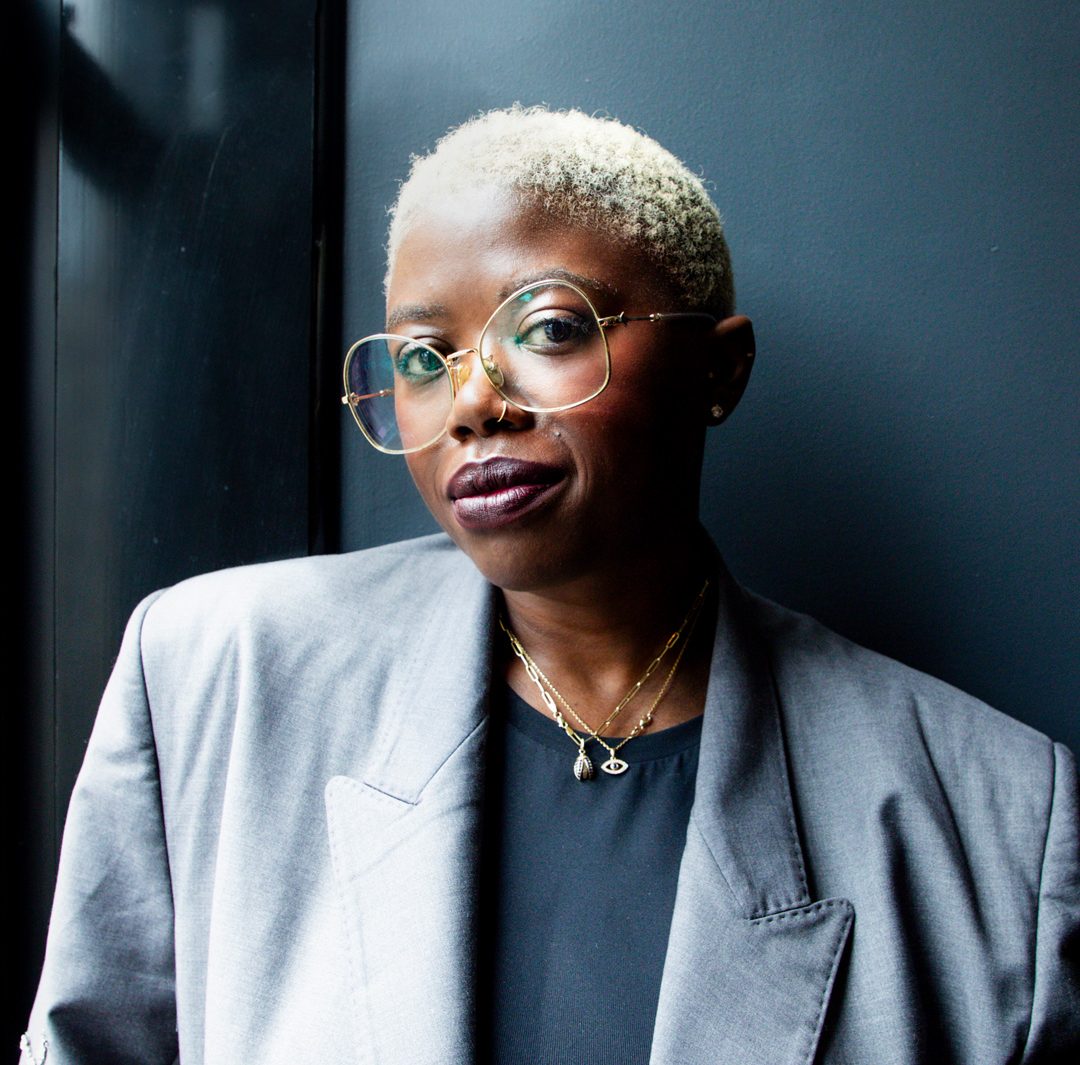
That challenge sits at the center of Abimbola Oladokun’s role as Senior Litigation Counsel at Roblox, where she bridges emerging technologies and the systems used to evaluate them. The platform connects millions of users who create, communicate, play, and build businesses through shared digital experiences. Her work covers litigation, child safety, content moderation, and product counseling. “Many of the issues in tech are cutting edge. One of the biggest challenges is figuring out how to explain them clearly. I relish breaking down a complex subject, not in a way that’s trying to sway anyone, but simply: this is what the platform is, and here’s how it actually works.”
Opportunity recognized
Raised in rural Arizona by parents who immigrated from Nigeria, Abimbola grew up with a strong appreciation for education, perseverance, and the opportunities that come from hard work. Her mother built a career as a nurse practitioner, and her father became a pharmacist. Their willingness to leave familiar surroundings shaped how she approaches risk and change. “My parents left the comfort of Nigeria to move to a country where they operated in a second language, and they had to figure it out. When you face a new challenge, even a difficult one, you just do it. The end goal is that you’re going to succeed.”
Their example reinforced the importance of recognizing opportunity as it knocks. In high school, Abimbola scored high on a pre-college assessment and received a voucher from the University of Chicago to apply. “They didn’t send a voucher and say, ‘You’re in, you’ve got a spot.’ They just said, ‘Hey, I think you scored pretty high. Why don’t you apply and just see?’ And that’s it. I took the opportunity.” Seizing that moment took her from Arizona to Chicago, a city that shaped the next decade of her life. She discovered new experiences and perspectives that challenged her to think beyond what had felt possible. The opportunities that shaped her future rarely arrived with guarantees, only with the invitation to take a chance.
Learning to explain
Leaving Arizona for the University of Chicago put Abimbola in a setting that challenged her assumptions and expanded her view of what was possible. The experience reinforced something she would carry throughout her career: growth often comes from stepping into unfamiliar territory.

Following graduation, she joined Teach For America, teaching sixth-, seventh-, and eighth-grade students before attending Northwestern Pritzker School of Law. Though her career would ultimately lead to technology litigation, she still describes teaching as one of the most influential experiences of her professional life. “I thought, I know how to read. But how do I know that I know how to read? Where did it click? I think that really made me mindful of the frustration of learning a hard skill as a young person.”
Helping someone else understand a concept required patience, empathy, and the ability to meet people where they were. These skills would prove just as valuable in conference rooms, negotiations, and courtrooms.
After law school, Abimbola remained in Chicago, spending several years in private practice while learning what energized her most, before turning toward the technology sector and its emerging legal questions.
Chicago had become familiar. She’d built her career and earned her law degree there over more than a decade. Still, the curiosity that first took her from Arizona now pointed her elsewhere. She moved to California, looking for greater proximity to technology companies and a new set of professional challenges. The move meant stepping away from her established comfort zone, but it was a chance to broaden her horizons. “I think there’s something to be said for reminding yourself that you can get up and leave. It’s about building that muscle of courage and knowing you can walk away if you choose. It was still scary, but I kept coming back to the goal. You know you’re going to get there.”
California brought her to Wilson Sonsini, then to Meta, immersing her in questions of platform liability, content moderation, speech, fraud, and product litigation on a global scale. “I try not to walk into a situation with a fixed perspective that can’t be challenged. I think it’s important to approach things with humility and curiosity because, especially in the legal realm, you really do have to stay open to learning.” By the time she arrived at Roblox, her mix of curiosity, communication, and litigation experience had become central to her approach.
Safety at scale
Joining Roblox put her in a role that brought together many of the issues that had defined her career. The platform is where conversations about communication, creator economies, content moderation, and online safety converge with product decisions and public policy. As Roblox expands its creator ecosystem and communication capabilities, those conversations increasingly involve stakeholders across legal, engineering, product, policy, as well as trust and safety. Everyone works toward enabling connection while maintaining safety.
For Abimbola, the work starts long before legal advice is ever given. It begins with listening, understanding the objective, and earning the trust needed to solve problems together. That’s when we can come together and create a solution. And fortunately that happens all the time at Roblox.”
Although issues may be complex, the Roblox goal is clear: create a place where people can connect, create, and communicate safely. “Safety is in everything we talk about. It’s part of the company culture. Whatever decision we make, we must think about how it affects safety.” The broader debate often centers on restrictions and regulations, but Abimbola’s perspective is shaped as much by her years as a teacher as by her years as a lawyer. “We all care about children and want them to be safe. I believe we can build a system in which kids, parents, and policymakers work together to create a safe place for children to communicate, understanding that it’s never going to be perfect. As a teacher, I know kids need to communicate developmentally. They need to exchange ideas.”
Looking ahead, she sees part of her job as preparing the business for conversations that have not yet fully arrived. “As litigators, especially in tech, we need to think about what’s going to happen in six, 12, 18 months. A lot of that you can tell from legal opinions, legislation, and the talking points of elected officials.”
Beyond the résumé
While the legal issues may evolve, Abimbola’s leadership philosophy has become more consistent. She is candid about the pressures young attorneys face and the challenges many encounter as they build confidence and a sense of belonging in the profession. “Imposter syndrome is really hard. You must remind yourself how much you’ve accomplished to get here. You belong in the room, and you didn’t get there by chance.”
Having navigated imposter syndrome moments herself, she is intentional about creating a culture in which people feel comfortable bringing up problems rather than hiding them. “I want the people I work with, or supervise, to feel there’s no culture of fear. They can make a mistake and still tell me, ‘This is what happened.’ I’ve made mistakes myself, and people have given me grace. The least I can do is extend the same to others.”
Early in her career, she measured success by accomplishments. Today, she cares more about her impact on those around her. “For a long time, success was about the right law school, the right firm name, the perfect résumé. Now it’s about creating environments where people feel seen and welcome, where they’re comfortable being themselves. If something goes wrong, we’ll figure it out together.”
The milestones that define her résumé matter less than the values that got her there: the willingness to embrace opportunity, the curiosity to keep learning, the courage to step into unfamiliar environments, and the belief that people do their best work when they feel they belong.
Reflecting on the journey from rural Arizona to Chicago, California, Meta, and Roblox, she would give her ten-year-old self little advice on achievement. “Continue to be yourself. You’re going to really like yourself. You’re going to be proud of the woman you’ve become because she stayed true. Don’t underestimate yourself. Your capabilities are more than you probably give yourself credit for, even now.”
It is a message she has already spent a career proving to herself; not through titles, credentials, or the names of the organizations on her résumé, but through a commitment to remain curious, open-hearted, and willing to take chances when opportunity knocks. The result is the kind of success she values most today: creating space for others to do the same.