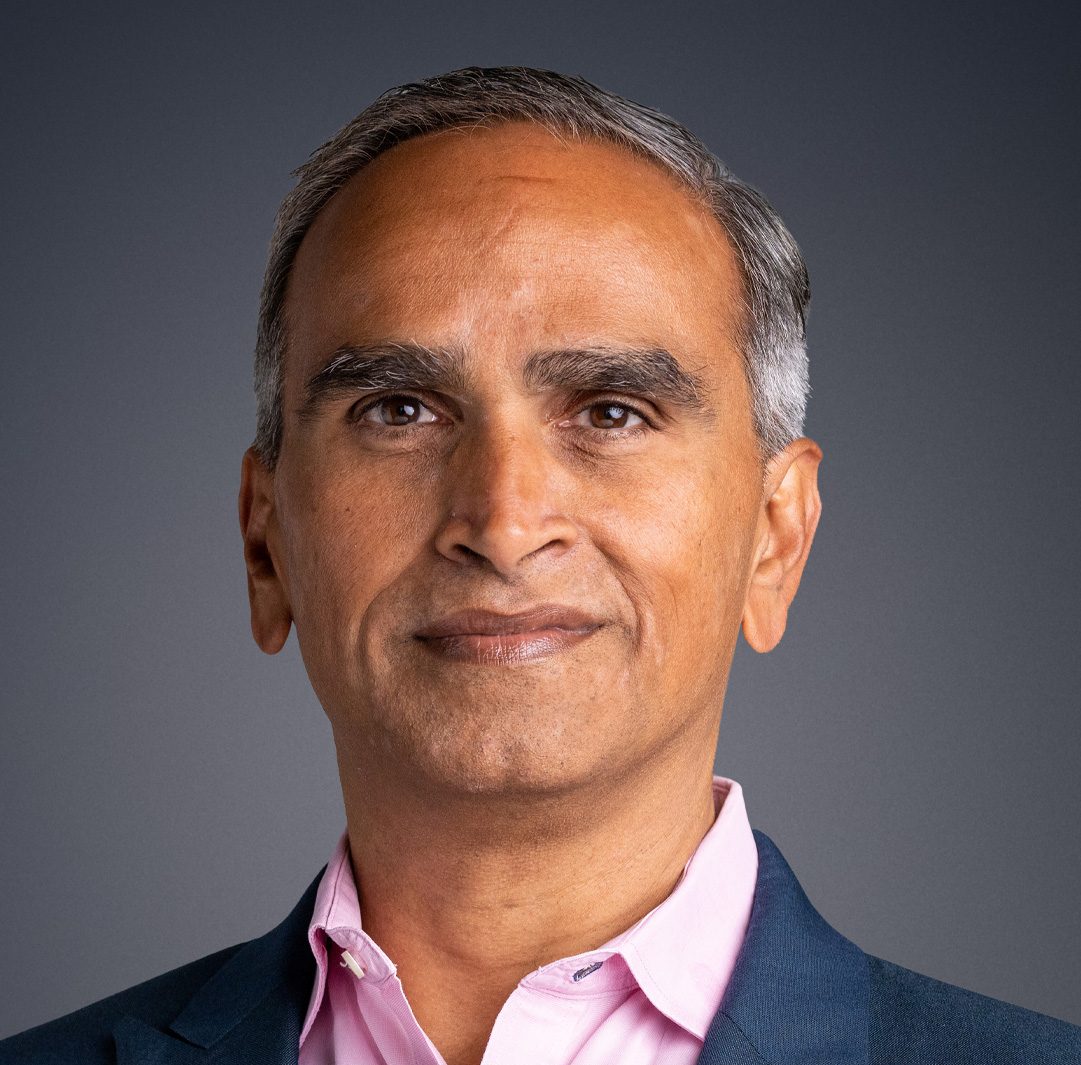
Higher education is navigating a period of change. Regulatory priorities continue to shift. Artificial intelligence is reshaping how institutions operate. Public companies face increasing expectations around governance and disclosure. At the same time, colleges and universities are under pressure to demonstrate value for students balancing careers, financial commitments and family responsibilities who expect their education to deliver meaningful value. At University of Phoenix and Phoenix Education Partners, Srini Medi sits at the center of those conversations, helping the institution manage risk while keeping its focus on the learners it serves.
As Chief Legal Officer and Secretary, Srini oversees Legal, Compliance & Ethics, and Regulatory Reporting. His remit touches nearly every part of the organization, from governance and regulatory strategy to major transactions, emerging technology and business decision-making. Yet he does not describe his role in the language of risk management. “I have always viewed my work as being mission focused. To me, that means the law provides my professional framework, while expanding educational opportunity for working learners gives the work its purpose,” Srini notes.

For Srini, the mission is not an abstract idea. He learned early on how opportunity can shape a family’s future. “This conviction is personal. I came to the US as an immigrant at age six. My father’s journey from poverty in rural India to a new life in America was made possible by education and by people who supported him.” Watching his father’s journey showed Srini how education can alter the trajectory of an entire family, extending its impact well beyond a single generation.
He reflects, “University of Phoenix serves adult learners, many of whom are the first in their families to attend college and may not have had the opportunities others take for granted. Being able to apply my legal career in support of those students is more than a professional achievement. It is the fulfillment of a personal journey.”
Beyond the law
The route to his current role began in corporate securities and commercial real estate law. “I began my career in private practice, which taught me technical rigor, discipline, and the importance of understanding the business purpose behind every transaction. Over time, I wanted to move beyond advising on individual deals and get more involved in the broader decisions that shape an organization. That is what brought me in-house, where I could work directly with business leaders, assess risk in context, and help the team make sound decisions.” The experience led to a perspective on legal leadership that breaks away from the old stereotype of lawyers as gatekeepers. Instead of blocking progress, Srini believes legal teams should open doors and help organizations move forward. “I tell my colleagues my job is not just to give a legal answer. It is to understand the business objective behind the question. If you answer only the question as it is framed, you might miss what the business is really trying to accomplish.”
He continues, “If someone asks whether they can take a particular set of roads from New York to Los Angeles, the real question is not about those specific roads. The goal is to get to Los Angeles. If the suggested route is blocked or unsafe, I should not just say no. I should help find the safest and most efficient alternative.” For Srini, the measure of effective counsel is not how often legal says no, but how often it helps the organization move forward with confidence. “When Legal gets involved early and understands the destination, we can spot issues sooner, build compliance into the solution, and help the organization move faster and with greater confidence. The question is not whether we can do something. It is about how we can do it responsibly, ethically, and legally.”
His solution-based philosophy carries particular weight at the University, where regulatory obligations intersect with student outcomes, technology, operations, and corporate governance. Success often depends on bringing legal considerations into conversations before decisions are finalized.
Building trust
Srini has focused on building the department for long-term strength, with responsibility shared across the team. Today, at the University the legal function includes roughly 30 professionals across Legal, Compliance & Ethics, and Regulatory Reporting.
The goal was not just organizational efficiency. It was about building a culture where expertise and judgment sit closer to the work. “Over the past six years, I have focused on building a leadership team rather than a department that depends on one person. We created four Deputy General Counsel roles with clear responsibilities and moved decision-making closer to the people who do the work.”
Under Srini’s leadership, the department improved coordination between Legal, Regulatory Reporting, and Compliance & Ethics, bringing teams together earlier in the decision-making process. “By addressing issues together and engaging the business earlier, we have reduced silos, improved decision-making, and become better partners to the University.” That operating model proved critical as the University navigated two major strategic transaction processes and, ultimately, Phoenix Education Partners’ successful 2025 IPO. Srini and his team helped manage the associated transaction, regulatory, governance, disclosure, and public-company readiness work, while keeping attorney headcount flat as those responsibilities expanded.

Srini affirms, “The real strength of the department is the team. They are the stars. They bring sound judgment, deep expertise, and real commitment to the University’s mission. My job is to set clear expectations, remove obstacles, and create an environment where they can do their best work.”
The line between legal advisor and business partner often appears in unexpected ways. For Srini, being a trusted counsel takes more than legal knowledge. It means understanding how colleagues think, what they are trying to achieve, and where legal advice fits into bigger business goals.
One conversation from an earlier role still stands out. “One day, the Chief Marketing Officer came into my office, described a proposed campaign, and asked what I thought. After listening, I said I did not see a legal issue. She explained she was not asking as a lawyer. She wanted my general perspective, because she valued my judgment.
“That exchange stuck with me because it shows what it means to be a true trusted advisor. An effective in-house lawyer cannot just know the law. You must understand how the business works, what each function wants to accomplish, and how the company makes money, serves customers, and manages risk.”
Managing change
Few sectors deal with as many overlapping layers of oversight as higher education, and that reality takes up much of Srini’s focus. “The challenge is not just understanding each framework. It is managing how they interact, especially when federal and state priorities shift.”
Over the past decade, the regulatory landscape has grown more fluid, bringing new urgency to how institutions respond. “University of Phoenix has a long history of operating in that environment. We have learned how to identify changes early, assess their practical effect, and adapt quickly. That work means close coordination across operations, finance, compliance, legal, and the business.”
Alongside regulatory change, Srini sees artificial intelligence as another force that will influence both legal practice and education delivery. His interest in technology began long before AI entered boardroom discussions. A lifelong computer enthusiast, he has spent years exploring emerging technologies firsthand, including building AI models on his own equipment.
For Srini, the technology’s promise is only half the story. His interest in AI is matched by a drive to understand where its limits begin. “Working with the technology has shown me it is incredibly powerful, yet it is limited in important ways. You cannot manage a technology responsibly unless you know both its opportunities and its limitations.”
He adds, “That hands-on understanding shapes how I approach compliance and ethics. In a highly regulated industry, we need to know what data a system uses, where human judgment is still necessary, and who is accountable for the results. We should not let uncertainty stop responsible innovation, but we should not confuse novelty with reliability. The law is still catching up with the technology, and lawyers now have a chance to help shape that development thoughtfully.”
Looking ahead, his priorities reflect the evolving needs of both higher education and public-company governance. Having helped guide the IPO, Srini now brings that same focus to operating effectively as a public company. “In the next 12 to 18 months, one of my main goals is to help the organization keep strengthening the governance, disclosure, and compliance practices needed in a public-company setting. That means making sure our processes stay disciplined without turning into unnecessary bureaucracy. I also want to give my team chances to broaden their experience and get ready for new challenges.” That forward focus extends to the growing role of AI in both law and education. “We are working at the crossroads of law, technology, education, and regulation. I am excited to help the University move through that change responsibly.”
Despite all the complexity that comes with regulation, governance, and new technology, Srini’s outlook stays rooted in lessons learned long before boardrooms and legal departments entered the picture. He often thinks about his family’s journey to the US, his parents’ hard work and education, and the people who helped him along the way.
The titles changed. The responsibilities grew. The principle stayed the same. Decades after his family started building a new life in the US, Srini is still guided by the opportunities others helped create and his responsibility to make the most of them. It is a belief that shapes both his leadership and his sense of purpose: “Believe in yourself, work hard, and take advantage of the doors that open for you. Not everyone gets the same opportunities, so recognize them, be grateful for them, and make the most of them,” he reflects.
A thought that has always resonated with Srini: “When you look around and assume that everyone else has life figured out, remember that they probably do not. They may be looking around and wondering the same thing about you.”
Katten is a full-service law firm with nearly 650 attorneys across the US and in London and Shanghai. Clients seeking sophisticated, high-value legal services turn to Katten for counsel locally, nationally and internationally. The firm’s practice areas include real estate, corporate, financial markets and funds, restructuring, intellectual property, litigation, structured finance and securitization, transactional tax planning, private credit and private wealth. Katten represents public and private companies in several industries, as well as government and nonprofit organizations and individuals. Katten is proud of its close working relationship with the University of Phoenix and Srini Medi over many years.