|
Getting your Trinity Audio player ready...
|
TikTok and parent company ByteDance have agreed to pay $400 million to settle US government litigation over alleged violations of children’s privacy law. The case shows how privacy failures can grow into substantial corporate legal exposure.
The settlement, announced by the Department of Justice on Aug. 21, requires TikTok to pay $300 million immediately. A further $100 million becomes payable if a court vacates an earlier consent decree involving TikTok predecessor Musical.ly.
The DOJ described the agreement as one of the largest recoveries obtained in a case involving the Children’s Online Privacy Protection Act, or COPPA. The claims remain allegations, and there has been no determination of liability.
The size of the payment deserves attention. But the outcome also carries a wider lesson for boards, general counsel and compliance leaders.
The DOJ pointed to changes TikTok made after litigation began in 2024. These included changes to management, compliance functions, privacy practices, age-related controls and parental oversight. The department said those measures advanced the public interests behind the case and helped support a settlement without prolonged litigation.
That does not mean remediation can replace legal compliance. It also does not mean later improvements remove possible responsibility for earlier conduct. The settlement instead shows that a company’s response after regulators identify a problem can influence how an enforcement case is resolved.
Privacy failures can become enterprise-level legal exposure
TikTok’s previous history with COPPA makes the scale of the latest settlement more significant.
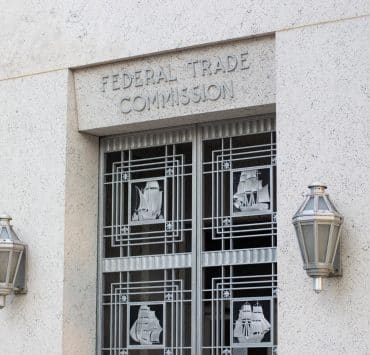
In 2019, Musical.ly, which had become TikTok, agreed to pay $5.7 million to settle Federal Trade Commission allegations that it had illegally collected personal information from children. At the time, the FTC said the payment was its largest civil penalty in a children’s privacy case.
The difference between $5.7 million and $400 million shows how large privacy enforcement costs can become. It also shows why companies should consider regulatory history when assessing legal risk.
A prior enforcement action can change the context for future scrutiny. Regulators may examine whether a company understood its obligations, whether weaknesses were properly escalated and whether controls introduced after an earlier case worked as intended.
For corporate leaders, this makes children’s privacy more than a specialist issue for a privacy or cybersecurity team.
Oversight can involve legal, compliance, product, engineering, data governance and senior management. Boards may also need assurance that material privacy risks are being reported at the right level.
Policies provide limited protection if a company cannot show how they work in practice. Companies need to know who owns age-assurance controls, how parental consent is handled, when data must be deleted and how failures are reported.
They also need evidence that these systems are tested.
That matters because privacy exposure can build over time. A weakness that first appears operational may become a legal issue if it affects statutory duties. It may then become a governance problem if senior leaders are not informed, resources are not assigned or action is delayed.
Remediation during litigation can affect the regulatory outcome
The DOJ’s description of TikTok’s changes also provides an important lesson for companies already facing an investigation or litigation.
Since filing its complaint in 2024, the department said TikTok had made significant changes to ownership, management, compliance functions and privacy practices. It also cited stronger protections for younger users, improved age-related controls and greater parental oversight.
The department said these developments materially advanced the public interests behind the litigation.
That language suggests regulators may consider whether changes made during a case are substantial enough to reduce future risk. For legal and compliance teams, this strengthens the case for acting quickly once a possible failure has been identified.
There is, however, an important distinction.
Remediation addresses an identified weakness and seeks to prevent it from continuing or recurring. Compliance concerns whether the company met its legal obligations at the relevant time.
Companies should not treat the two as interchangeable.
A business facing enforcement therefore has two related tasks. It must respond to allegations concerning past conduct while also showing that any continuing weakness has been addressed.
Effective remediation may include new reporting lines, clearer control ownership, better data deletion procedures, stronger testing and more direct board oversight.
The focus should be on measurable change rather than a policy rewrite that leaves underlying processes untouched.
That approach can also improve discussions with regulators. A company that can document what failed, why it failed, who is responsible for fixing it and how the new control is being tested has a stronger record of its response than one relying on broad assurances.
The strongest privacy strategy starts before regulators arrive
The TikTok settlement also shows why companies should examine the financial assumptions behind privacy risk.
Insurance Business reported that large regulatory penalties can exceed the sublimits contained in some cyber and directors and officers policies. That can leave a gap between the scale of an enforcement action and the insurance protection executives expect to have available.
Insurance can form part of risk planning, but it cannot compensate for weak compliance systems.
The more important corporate lesson comes earlier.
Companies that handle children’s information or other sensitive data need clear accountability before a regulator becomes involved. Legal requirements must translate into operating controls. Weaknesses must reach decision-makers quickly. When a failure occurs, the company needs a process for correcting it and proving that the correction works.
TikTok’s settlement does not establish that remediation removes liability. The DOJ has stated that the resolved claims remain allegations and that there has been no determination of liability.
The case does show that compliance posture can continue to matter after litigation begins. For boards and compliance leaders, that is another reason to treat privacy governance as an ongoing management responsibility rather than a response reserved for the start of an enforcement action.
Source