Healthcare organizations face pressure from all sides: rising costs, shifting regulations, and daily cybersecurity threats. Insurers, providers, policymakers, and patients all want solutions to increasingly complex questions.
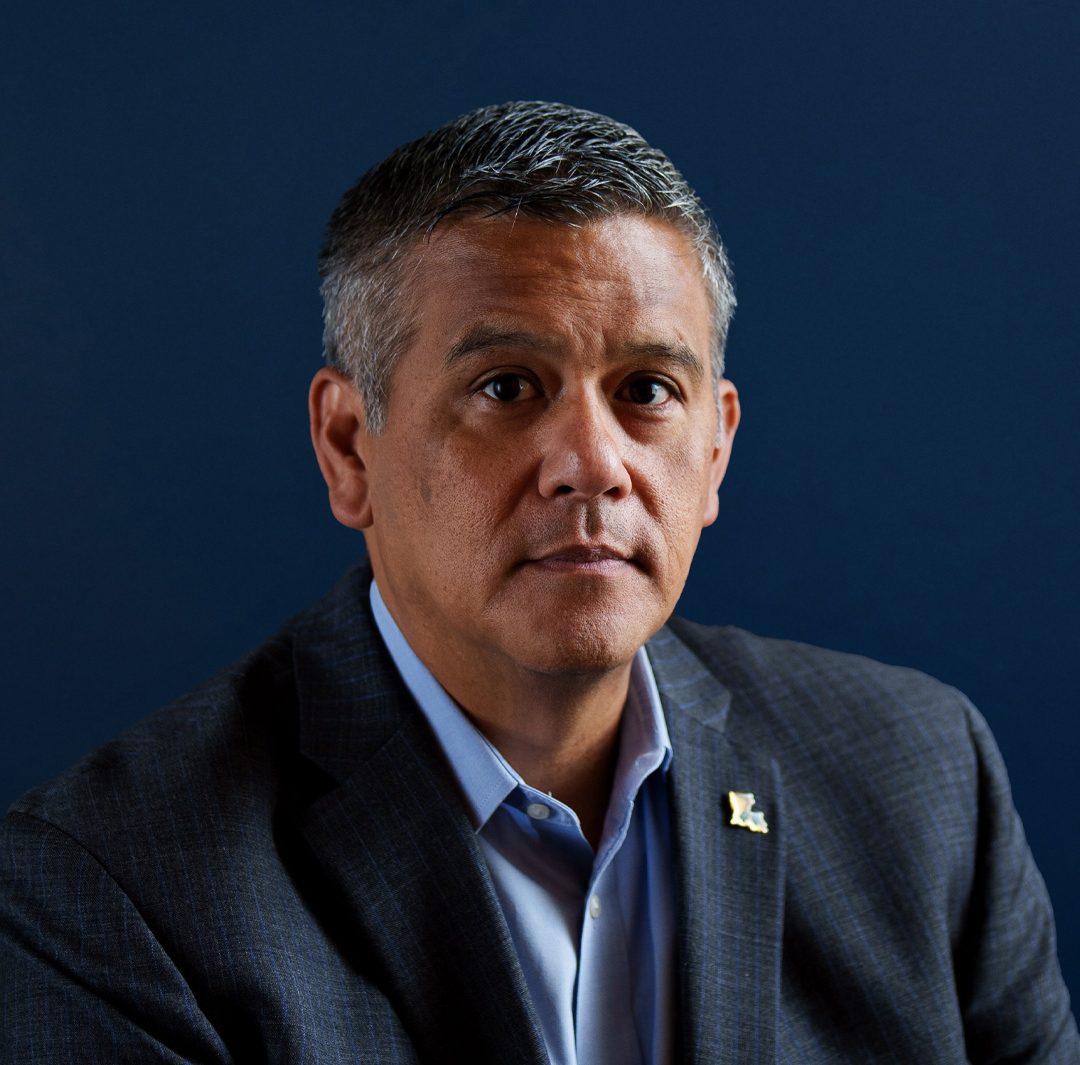
For Lou Patalano, Chief Legal Officer at Blue Cross and Blue Shield of Louisiana (Louisiana Blue), working in this environment means leading a legal function that goes beyond traditional risk management. Lou’s responsibilities cover legal, compliance, privacy, audit, enterprise risk, government relations, and cybersecurity, so he’s right at the center of decisions shaping the company’s future.
Lou doesn’t see legal as just a department that reacts to problems. He makes it part of the business itself. “We are strategic business partners who happen to be lawyers, not the other way around. If you’re looking at it from a business lens and you really learn and understand where the business wants to head, then you can be a better lawyer, and strategic risk partner for the business,” he says.

His collaborative philosophy sits at the center of a career that has crossed government service, healthcare providers, health plans, private practice, and executive leadership. He now shapes his work at Louisiana Blue, a nonprofit insurer serving individuals, employers, Medicare beneficiaries, Medicaid members, and state and local government employees across Louisiana.
Finding the path
Pursuing a career in healthcare law was never in question for Lou. What followed was a career that moved through courtrooms, boardrooms, health systems, insurers, and private practice before bringing him to Louisiana Blue: “The one thing I knew I wanted to do was practice healthcare law,” he reflects.
The son of a US Army serviceman, Lou spent his childhood moving between states and countries, including Germany and Korea. This gave him exposure to different communities and perspectives long before he entered a courtroom or boardroom.
Drawn to a field that changes with society, Lou found the pace energizing rather than exhausting. “I like the ability to stay on my toes, keep learning, to have to keep adapting. We are applying today’s facts to ever-changing areas of law.”
After law school, he clerked for the North Carolina Court of Appeals before joining the North Carolina Attorney General’s Office as a healthcare fraud prosecutor. That early experience fighting fraud from the government side gave Lou something few in-house lawyers carry: an instinct for recognizing when legal claims are legitimate grievances and when they’re instruments of leverage. “You learn pretty quickly that not every allegation is what it appears to be on the surface,” he outlines. “The facts matter. The law matters. And the context matters.” The role also challenged assumptions he held about his future.
“If you’d asked me right out of law school what I never wanted to do, I’d have told you I didn’t want to practice criminal law or litigate cases. And yet, the first thing I did was practice criminal law and litigate my own cases in court.”
That experience gave Lou a crash course in regulation, enforcement, and fraud investigation from the government’s perspective. He tried cases, presented before federal grand juries, and partnered with agencies including the FBI, IRS, and US Attorney’s Offices.
Leadership positions at Blue Cross and Blue Shield of North Carolina followed, including oversight of its anti-fraud program. He later became the first General Counsel at Cape Fear Valley Health System, supporting its expansion into a regional organization before returning to Blue Cross and Blue Shield of North Carolina as Deputy General Counsel.
A move to Sentara Health broadened his experience across an integrated health system and health plan, and private practice with K&L Gates added another dimension before he joined Louisiana Blue.
When Louisiana Blue approached Lou, it wasn’t just about a new title, it was a chance to bring decades of healthcare experience to an organization that shares his values. “It was exciting for me to join a company with that commitment, that reputation, and that kind of follow-through on its mission and vision,” he recalls. Lou also cited Louisiana Blue’s status as a Louisiana-based non-profit – always looking out for the best interests of its members and the communities it serves, and often refunding unused premiums to its members – not to shareholders as well as its rich history of supporting other Louisiana-based non-profits that aid the underserved through its Foundation.
Partnering for progress
Healthcare law continues to evolve at speed, and Lou sees legal leadership becoming increasingly intertwined with business strategy.
It’s a threat that never lets up; AI has only added another layer. “We have a strong cybersecurity team, but it’s not stopping all those threat actors out there from trying to hack away and attempting to get through,” Lou observes.

At Louisiana Blue, though, the response isn’t to retreat into risk avoidance. Lou encourages teams to immerse themselves in the business so they can provide context-driven guidance when challenges emerge.
He expects the same from the leaders who report to him. “Go out there, learn the business, attend business meetings, learn what you can, because that will help you when you get into a crisis. Those personal relationships in times of calm will feed your analysis and advice going forward.”
One question comes before anything else: “Where do you want to get to? Tell me what the end product is, and then let’s work our way back?” That question shows how Lou views legal leadership. He’s not just a rubber stamp at the end of a project. He’s a partner shaping the journey from the start.
That approach turns legal guidance into a pathway rather than a barrier: once teams know the destination, legal, compliance, audit, and risk groups can figure out how close the organization can get while staying within regulatory boundaries. “If you bring legal in early, it helps form that journey. If you bring legal in late and we’re doing cleanup, it seems like we’re either the department of no or we can’t really help.”
Building opportunities
Throughout his career, a group of trusted mentors shaped both Lou’s professional journey and his leadership style. Judge Sidney Eagles encouraged him to pursue healthcare law early in his career. King Prather became a long-term mentor and sounding board through multiple chapters at Blue Cross and Blue Shield of North Carolina. Former Cape Fear Valley CEO Mike Nagowski and healthcare leader Brad Wilson and Mary Beth Johnson became part of a network Lou continues to rely on today.
“I’ve been lucky to have people in my life who’ll grab coffee or lunch at the drop of a hat. When I need advice, I just pick up the phone. That’s helped me as I’ve navigated my professional and personal journey,” he shares.
Their influence extends beyond career advice. Lou still points to lessons learned from King, who challenged leaders to embrace a world of volatility, uncertainty, chaos, and ambiguity, or as he referred to it a world of VUCA, and who inspired a reminder that sits on Lou’s desk today: “I’m open to feedback.” Those experiences motivated him to create opportunities for others.
One initiative Lou is particularly passionate about is the Pipeline Program, which he first developed in North Carolina before bringing it to Louisiana. Built around partnerships with local law schools like LSU Law Center and Southern University Law Center, the program combines paid summer internships, academic externships, and a one-year rotational staff attorney position.
The goal is straightforward: create entry points into in-house legal careers. “A lot of corporations hire experienced attorneys. They don’t give young lawyers the opportunity. I’m helping young lawyers in their career development, giving them opportunities that they might not otherwise get.” Several participants have already moved into judicial clerkships and corporate legal positions.
“Giving back and mentoring others, just as people have mentored me, is about helping folks move forward in their careers. Seeing people prosper and knowing I played a small part means a lot,” he notes.
Lou’s investment in people shapes how he thinks about the healthcare industry broadly – not just the lawyers he mentors, but the members Louisiana Blue serves. Lou has seen firsthand novel litigation that misapplies or misuses legal theories in an attempt to impose non-contractual obligations on health insurers. These are the types of cases that lead to excessive and unpredictable liabilities and higher premiums for everyone. Industry conversations often focus on disagreements between insurers, providers, pharmaceutical companies, and policymakers. “If we could just get different stakeholders to collaborate, we’d stop pointing fingers at each other and look inward. If insurance, providers, pharmaceutical companies, and PBMs all sat at the table and worked together, instead of just serving their own interests, we could really start bending the cost curve and improve health.”
The real challenge, as Lou sees it, isn’t figuring out what needs to happen. It’s building enough alignment to get it done. Behind every regulatory debate, premium hike, lawsuit, or policy decision are real people. “At the end of the day, we call them members, providers call them patients, but it’s all one human being.” It is not an abstract concept. It’s the reason he believes legal strategy must be anchored in what’s actually good for the industry, not just what’s advantageous in the moment.
For all the complexity of his role, Lou’s definition of success remains grounded elsewhere. “If you were asking me what my biggest success is, I’d tell you I’ve got two great kids, both in college, of whom I am extremely proud.” He travelled with his son Will to see the France-Morocco World Cup match in Boston and the Taylor Swift Eras Tour in Los Angeles; memories he was determined not to miss. With his daughter Ali, a theatre enthusiast and emerging artist, that often means trips to Broadway to see shows like Hamilton and The Phantom of the Opera.
The connection between family and philanthropy is evident in the causes he supports. Alongside his commitment to women’s athletics at the University of North Carolina, including its Women’s Basketball and Gymnastics programs, Lou serves on the Boards of the National Judicial College and UNC Gillings School of Global Public Health Foundation and is involved with arts initiatives including the Miranda Family Fellows Program.
Whether mentoring young lawyers through Louisiana Blue’s Pipeline Program, supporting students and student-athletes, or creating memories with his children, the thread is consistent. For Lou, success is no longer defined by where his own career goes next, but by the opportunities, experiences, and support he can provide for others.