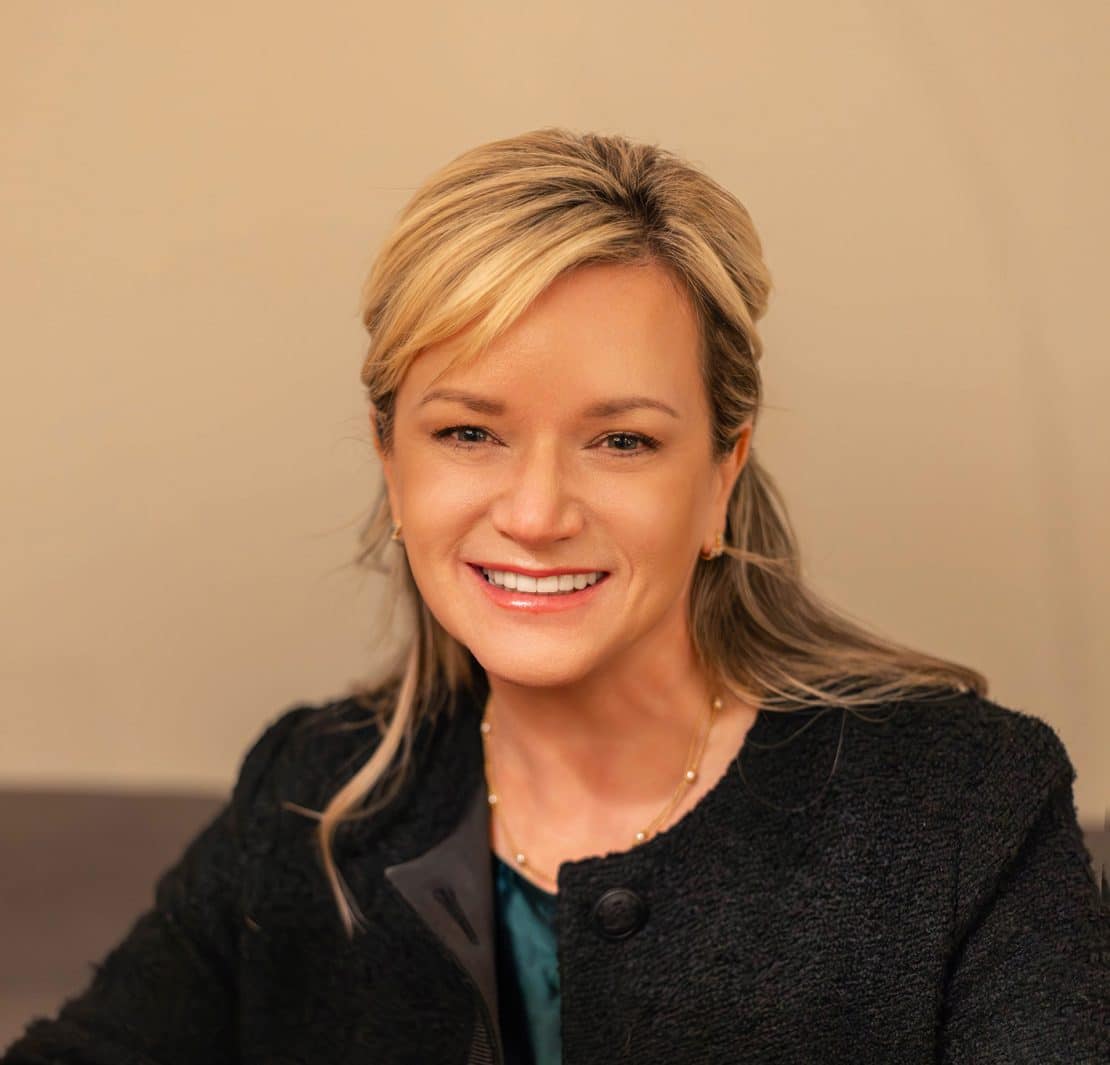
Lawyers today no longer operate solely in courtrooms. They navigate boardrooms, manage inboxes, and join cross-functional meetings. They sort facts, shape arguments, and help executives make informed decisions under pressure. As Karen Manley shares, “Legal isn’t just about getting the answer right anymore. It’s about making sure people understand the answer and what it means for the business.” This shift has turned legal teams from document-focused departments into strategic partners woven into daily operations.
As Assistant General Counsel at Cox Enterprises (Cox), Karen manages litigation and leads both the e-discovery and subpoena response teams. Her teams respond to law enforcement requests and oversee complex data discovery projects. “All of the work comes with real deadlines and real consequences,” she notes. “So, we always focus on being accurate, efficient, and clear at the same time.”
Karen is intentional about how she communicates legal risk to business leaders. Instead of sending long legal memos, she presents options that align with company priorities and timelines. “Executives don’t need every legal detail,” she explains. “They need to understand the trade-offs and the consequences, so they can make a decision.”

Karen draws a connection between Cox’s corporate culture and her education at Notre Dame Law School. Notre Dame focuses on ethics and public service, prides itself on educating “a different kind of lawyer.” Cox’s long-standing philosophy is to “do the right thing.” Cox is committed to doing the right thing for its employees and customers, as well as to being a good corporate citizen. As a member of Cox’s Law and Policy team, Karen has been encouraged to volunteer her time to community service projects and her legal skills to entities in need of assistance.
Cox builds a culture where employees trust the business to do the right thing. Karen wants employees to feel comfortable sharing sensitive information with her, so the legal team can give the best possible advice.
She believes legal leaders shape how information flows. “If people feel like they must spin things for legal, that’s a problem. I want people to feel safe being honest, even when the situation is uncomfortable.” That philosophy has helped legal become a partner instead of a barrier. “When employees trust us, we can solve problems faster and get better outcomes,” she says.
Operational improvements and efficiency
In leading the subpoena response team, Karen has developed operational improvements that boost efficiency and reduce risk. Handling subpoenas and legal requests, often from law enforcement, takes precision, speed, and careful management of sensitive data. When she joined, she didn’t assume existing processes were set in stone. “I wanted to understand every single step and ask whether it actually mattered,” she explains.
She asked her team to walk her through their workflow and explain the purpose behind each task. If a step didn’t add value, she questioned it. “If no one ever looks at a file we’re creating, why are we doing it? At some point, you just say, ‘Let’s cut it,’” she recalls.
By eliminating low-value work, she created room for automation. Karen didn’t start by looking for new tools. “We looked around internally first until someone said, ‘We already have that automation somewhere else. You just need a few tweaks.”
By adapting existing systems, the team automated many routine subpoena tasks and kept human review for complex matters. Karen says, “Automation is great for repetitive work, but judgment calls must be made by people.” Today, automation handles most of the team’s workload, enabling faster response times without sacrificing human oversight.
Karen makes it clear that automation is not about removing lawyers from the process. “It’s about freeing them up. If we can eliminate steps that don’t add value, our team can focus on the decisions that really need legal expertise,” she adds.
Because many subpoenas and law enforcement requests involve sensitive information, Karen looked for a way to reduce risk by ensuring that requests were properly verified. “We needed a secure way to know exactly who was asking for information,” Karen points out. In response, she and her team partnered with Kodex, a third-party vendor with a centralized portal for verifying requests and responding to law enforcement.
“Kodex gives us one place to track everything. It verifies requesters, reduces risk, and provides data on response times and volume,” she explains. The portal also improves transparency by allowing internal business communications among multiple parties. She adds, “For us, having a single source of truth was huge. It made the process more secure and efficient at the same time.”
Karen brings that same operational discipline to e-discovery, where legal and technology teams work closely together. She often asks teams to revisit exceptions to standard processes. “Sometimes an exception made sense years ago, but it doesn’t anymore,” she observes.
Whenever possible, she pushes teams back toward company-wide best practices. “Consistency makes everything easier, including training, scaling, quality control, and it reduces risk,” she explains.
Education plays a key role, too. Karen regularly reminds employees, especially new ones, about legal holds, data preservation, and attorney-client privilege. “I don’t want litigation to be the first time someone hears about a legal hold or privilege. The more we communicate upfront, the fewer surprises we have later.”
Career breaks, context, and perspective
Karen often describes her career in three chapters: big law, time away to raise her family, and her return to the profession in-house. After graduating from Notre Dame Law School, she practiced litigation at Winston & Strawn in Chicago and Washington, D.C. before stepping away from full-time practice. “That wasn’t part of some grand plan. It was what made sense for my family at the time,” she reflects.
After a career break and relocation to Atlanta, Karen had to retake the bar exam, balancing her return to law with caring for her three young sons at home. “It took a lot of flexibility and creativity,” she remembers. She re-entered the workforce as a contract attorney and gradually moved into new roles at Cox. That non-linear path reshaped how she thinks about work and leadership. “When you’ve been in different roles, you understand context better. You realize how every piece fits together.”
Her belief shows up in how Karen leads her teams today. She often tells the story of a paralegal who found a critical document because they understood the broader case. “Every role, no matter how small it seems, matters to the team’s success,” Karen highlights. For her, context isn’t abstract; it’s what lets people at every level make meaningful contributions.
Karen’s leadership philosophy reflects how she learned to handle mistakes early in her career. She remembers a senior partner pointing out a citation error. “I said, ‘I’m sorry, I’ll double-check everything. That shouldn’t have happened,” she recalls. The partner’s response stayed with her: “Thank you for owning it. Let’s fix it and move on.” The lawyer moved on, and it was never brought up again.
That lesson informs how she leads today. “Mistakes happen. What matters is taking responsibility and learning from them.” She encourages her teams to speak up, correct issues, and keep moving forward together.
When Karen thinks about her legacy, she hopes people remember her openness to dialogue. “I tell outside counsel and my teams to challenge me. If they see a better way, I want to hear it.” She values respectful disagreement and creative problem-solving. “The best ideas usually come from conversation, not from everyone nodding along.”
Across litigation, subpoenas, and e-discovery, Karen has built a legal function aligned with business goals, grounded in ethics, and strengthened by technology. “At the end of the day, our job is to help the business move forward the right way.”
“Karen is a supremely talented litigator with extraordinary instincts and judgment. She is a leader with an uncanny ability to bring clarity and focus to the most complex matters – and it is an honor to collaborate with her.” – Josh Rosenkranz & Chris Cariello, Orrick Partners