Standing up a new company is rarely neat or tidy. Systems must appear almost overnight. Decisions land before the questions are even fully formed. Teams are expected to deliver as if nothing has changed, even though everything has.
That was the reality facing Embecta Corp as it prepared to spin off from Becton, Dickinson and Company. The business, which provides diabetes care products and support for people who rely on insulin delivery and related supplies, needed its legal function ready on day one. Contracts, vendors, workflows, and technology all had to work immediately.
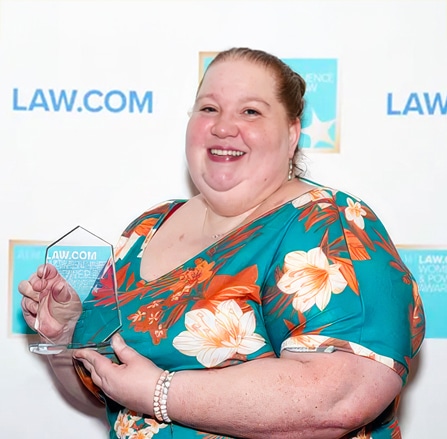
Chrissy Seethaler stepped into that moment with a steady hand. Instead of trying to control every variable, she built structure, earned trust, and helped people move forward as a team. Her practical, transparent, and deeply human approach has shaped not just how legal operations work at embecta, but also how the global legal team collaborates and grows.
Chrissy serves as Senior Manager of Legal Operations and Indirect Procurement Processes and as Global Head of Legal Operations at embecta. A certified paralegal with more than 15 years in the legal field, she brings a strong operational foundation to everything she does. Her work spans technology implementation, procurement alignment, budgeting, and global coordination, all guided by a clear belief: strong systems matter, but people matter more.
Learning through accountability
Chrissy traces her leadership philosophy back to the people who supported her early in her career. “They saw something in me. They saw my desire to learn, grow, support the business, and simplify processes and procedures,” she says.

That early encouragement shaped the way she leads today. She gives her team space to try, even when the outcome isn’t perfect. “As a leader, I like to emulate that by allowing failure. We don’t always learn from our successes,” she shares.
Failure, in her view, isn’t the absence of accountability. It actually requires it. “You can’t have failure and autonomy without having accountability,” she points out. For Chrissy, accountability is always constructive. “It’s education. It’s coaching. It’s figuring out what happened.”
She believes good ideas don’t come from job titles alone. She often references a line from a Pixar film, “anyone can cook,” as a reminder that insight can come from anywhere. “Differing viewpoints allow us to expand our thinking and become more empathetic. We’re not all experts at everything,” she notes. That mindset now defines embecta’s legal operations culture.
Building the foundation
As embecta entered its first year as an independent company, the legal function quickly adjusted to the demands of a global business. Work volumes grew fast, and the team had to respond in real time. “We found that we lacked the resources to be as efficient and nimble as we could be,” Chrissy admits.
Legal operations expanded from a single role to a three-person team within the first year after the spin, reflecting the scale of work involved in building systems from scratch and supporting teams across regions. As responsibilities evolved, the structure shifted again, with Chrissy balancing strategic initiatives alongside day-to-day operational support. She credits her teammate with making that balance possible: “I can delegate, and I know that it’ll get done and it’ll get done right.”
As legal operations matured, it became a central point of coordination for the legal team, helping manage cross-functional work while continuously refining internal processes to keep pace with the business.
Chrissy joined embecta just months before the 2022 spin. The General Counsel’s first request was simple and urgent: implement a contract lifecycle management system as soon as possible.
Rather than trying to solve everything at once, Chrissy focused on immediate needs and early wins. She automated the North America NDA process, trained executive assistants, and built workflows that allowed NDAs to move forward without legal review when no material changes were made. “That was a pretty big impact for it being a small win,” she says.
From there, priorities multiplied. E-discovery. E-billing. Vendor setup. Where possible, the team leveraged technology relationships. Chrissy partnered closely with procurement to support agreements critical to standing up the business, including HR benefits, payroll, IT systems, supply chain, and other foundational services.
Technology as a connector
As her role evolved, Chrissy moved from contract specialist to architect of embecta’s legal technology ecosystem. She led implementations across CLM, e-billing, and e-discovery, expanding her reach across the organization. “It has given me the opportunity to work with functions that I had not partnered with in the past,” she says.
Working closely with IT reshaped how she views implementation. “Most people think IT is just this phantom,” she adds. Through hands-on collaboration, she gained a deeper appreciation for how legal technology affects IT’s day-to-day work and how shared ownership drives better outcomes.
Her partnerships now extend across procurement, marketing, sales, medical affairs, and beyond. The CLM transformation, in particular, meant broad engagement. When embecta decided to move away from its initial provider, Chrissy made sure stakeholders across functions and regions had a voice in the selection process. “We made sure that they had feedback. They got to see options and even participated in proof of concepts,” she explains.
Those relationships paid off. “Colleagues have learned my work ethic, and they’ve learned they can trust me,” she shares. Even when Chrissy doesn’t have the answer immediately, they know she’ll find it. “They know I can find a person on the legal team who can get them their answer.”
The wagon wheel approach
Chrissy often describes legal operations with a wagon wheel analogy. “My view of the wagon wheel, with legal operations at the center, doesn’t mean we’re the most important piece. It means we’re the support that brings the legal team together and connects us with the business,” she clarifies.
Legal operations connects legal and finance on billing, vendor setup, and payment issues. It links legal with procurement, supply chain, and R&D. Chrissy’s team meets regularly to discuss these functions and align on upcoming initiatives with the right legal resources early.
The goal is clarity and access. “The business knows they can come to one point of contact on the legal team. We may not have the answer, but we’ll connect them with whoever does,” she highlights. Without that central hub, the wheel stops moving.
Since the spin, the global legal team has grown from five people to 19. Legal operations remain a lean two-person team, but Chrissy’s philosophy shapes how the entire group works, especially in a multinational environment. “As a multinational company, working outside the US brings a variety of challenges. You have different cultures, different operating mechanisms, and local laws.”
She learned that firsthand while supporting global supply chain agreements. One moment stands out. “In India, a stall in a market square holds a valid pharmacy license to be able to sell embecta products,” she affirms. The reality changed how she assessed risk and contract language. “Only by viewing those risks differently could I be sure that the agreements had language that made sense for that market.”
She encourages her team to understand the business at that same depth. Borrowing from the idea that it takes a village to raise a child, she asks them to identify stakeholders, understand why they matter, and learn how their functions work. “Only by answering those questions can they really understand what the village represents and what it needs to thrive,” she observes.
Redefining success
Chrissy’s definition of success has evolved over time. Early in her career, success meant pulling metadata from printed contracts. Later, it became about best practices, efficiency, and process design. Today, success looks different. It means understanding global business needs, aligning resources thoughtfully, and using technology to support strategic priorities.
One constant remains. “I still need to make the General Counsel and embecta look good. But what ‘good’ looks like has changed,” she reflects.
Today, Chrissy is more willing to step into strategic conversations. “I’m not afraid to take a seat at the table,” she acknowledges. “I’ll ask to join calls or project teams when it makes sense.”
Leading through uncertainty
Chrissy credits her mentors with teaching her not to fear failure, a mindset that serves her well as legal operations explores emerging technologies, including AI-enabled tools within the CLM. “I need to know my limitations,” she says. She relies heavily on subject-matter experts across IT, data privacy, information security, internal audit, and compliance. “If I don’t lean on these people, I will fail,” she stresses.
Clear communication anchors her approach. For large initiatives, she builds structured communication plans with clear audiences, timelines, and milestones. Delegation is an ongoing discipline. “I’m a bit of a perfectionist. I like to think that I can do everything myself,” she admits. But Chrissy keeps learning about balance, trust, and her own limits. “I discover my own limitations every day,” she adds.
That self-awareness, paired with humility and consistency, allows Chrissy to lead through complexity without losing sight of the people around her. In a global organization navigating constant change, her message remains simple and powerful. Anyone can cook. And with the right support, anyone can contribute something meaningful to the table.