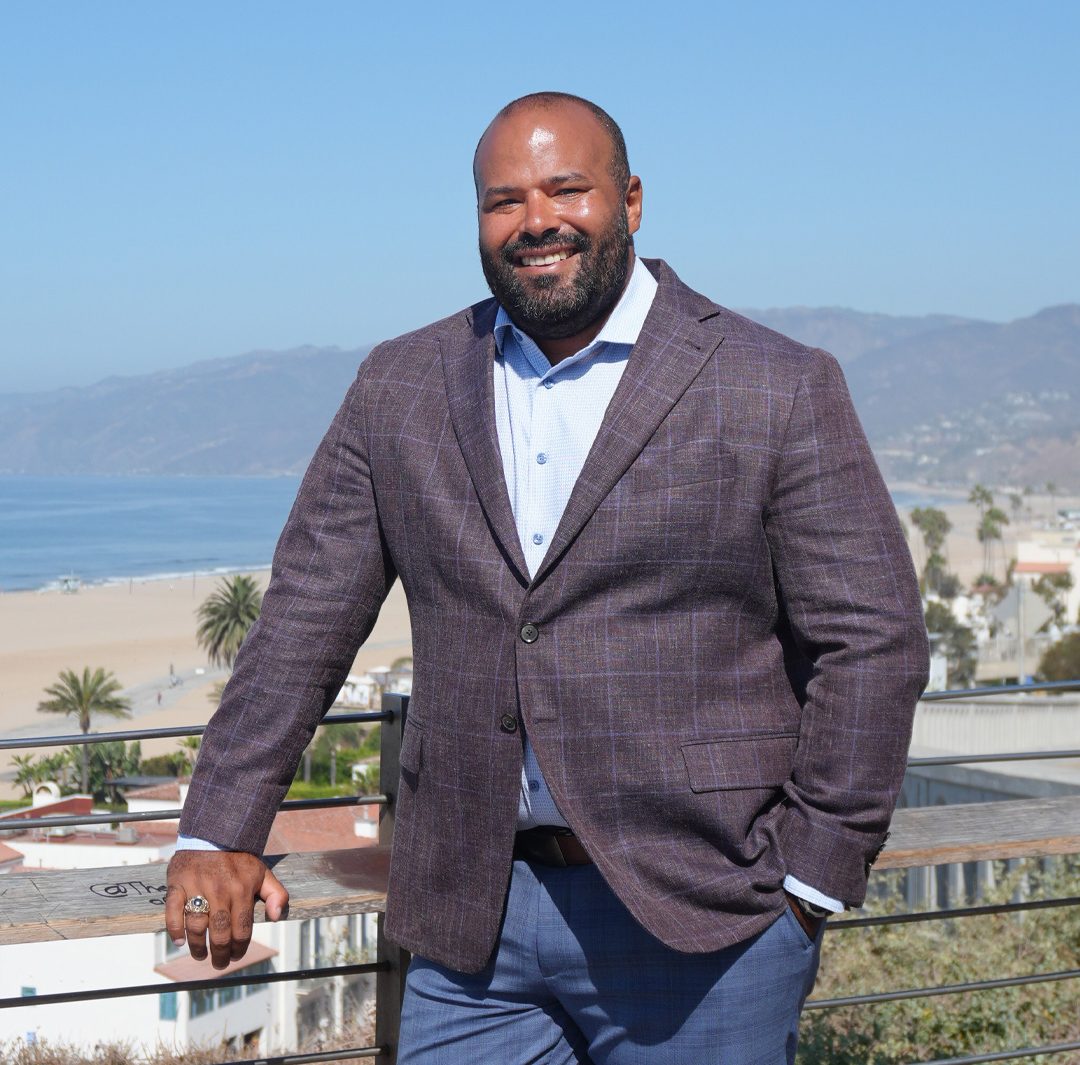
Josh Robinson’s business and legal instincts developed far from Clearlake Capital Group’s ocean facing boardrooms.
Four days after graduating high school in Redondo Beach, California, Josh traded a red cap and gown for a gray cadet uniform at the United States Military Academy in West Point, New York. Two decades later, as Vice President & Associate General Counsel at Clearlake, he applies military style structure, problem solving, and leadership to a $185 billion global investment firm spanning private equity, credit, infrastructure, secondaries, and co-investment strategies. Josh’s responsibilities touch fund formation, finance, mergers and acquisitions, compliance, governance, ESG matters, and general firm operations; a mix that draws equally on legal analysis, commercial judgment, negotiation, and coordination.
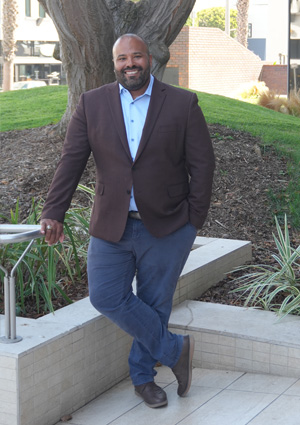
After commissioning from West Point as an Infantry Officer in 2009 and graduating from Ranger School – the US Army’s elite small-unit tactics and leadership course – Josh served over six years on active duty, including a year-long combat deployment to Kandahar Province, Afghanistan as the leader of a 47-man Stryker Platoon. That experience still shapes how he solves problems today. “The Army’s leadership training isn’t just about weapons and tactics. It really comes down to learning to manage time, break an operation into smaller parts, communicate a clear plan, and execute,” Josh says. “All of this happens while you’re trying to accomplish a mission that’s inherently dangerous in as safe a manner as possible.” That maps well onto transactional law, especially in-house, where the job involves understanding a transaction, its decision points and legal risks, then recommending ways to manage those risks.
For Josh, risk isn’t something to eliminate, it’s something to understand, weigh, and manage against the larger objective. “It comes down to commerciality and weighing costs and benefits. It’s like planning a military patrol: you have to ask what the overall goal is, where the biggest risks are, and what you can do to encourage simplicity and mitigate those risks without compromising the mission.”
The military influence shows up in how he handles pressure. “People take their cue from you,” he says. “A fellow veteran told me early in my career that people will sometimes treat routine work issues like dire emergencies, when really, they just need to be prioritized accordingly. If you can hold onto that perspective, you skip the panic and go straight to solving the problem – that’s where you add the most value.”
Years after leaving military service, Josh still approaches each matter with similar questions: What’s the objective? What stands in the way? How do we move forward? What needs to happen next? That feedback loop – objective, obstacle, solution, next step – shows up whether he’s reviewing a financing arrangement, a fund document, or a transaction agreement. It’s a mental framework carried straight through from the Army to the deal table.
Path to private equity
After leaving active duty in 2015, Josh enrolled in Northwestern University’s joint JD–MBA program through the Pritzker School of Law and Kellogg School of Management. After graduating, he joined Kirkland & Ellis as a restructuring associate during a period that included surge in restructuring activity spurred by the Covid-19 pandemic, an experience that gave him a multidisciplinary perspective.
“I’ve heard restructuring described as the last bastion of the generalist in Big Law, and I think that’s fair,” Josh says. “In restructuring, you have to understand how a company’s business model, capitalization table, strategic transactions, commercial contracts, and litigation all intersect with the bankruptcy code, so you get comfortable picking up new subject matters quickly and leading processes across multiple workstreams and practice areas.”

As Clearlake has built out its platforms into liquid credit, private credit, and other private markets solutions alongside the flexible mandate that is core to its private equity roots, that breadth has become more valuable as legal questions move across strategies. Looking back, the move from restructuring to private markets wasn’t as big a leap as Josh initially expected. “When I first came to Clearlake, I saw it as stepping into a brand-new specialty,” he says. The real difference was one of perspective, not subject matter. “The longer I’ve been here, the more I’ve realized the role rewards curiosity and sound judgment across practice areas, rather than deep specialization in one,” Josh says. “To some extent, good lawyering is good lawyering.”
While Clearlake’s growth has expanded both the volume and variety of issues Clearlake’s legal team is called on to navigate, Josh sees consistency beneath the complexity. “There’s rarely a typical day. The legal questions are varied, but it always comes back to the same process.” He focuses on understanding timing, asking the right questions, evaluating key risks and opportunities, and collaborating with business teams to come to a decision.
“I try to prioritize by asking: what’s likely to have the biggest impact and serve the long-term interests of the firm and its investors, then let that guide my time.” For Josh, legal detail matters, but the true test of a decision is whether it moves the business closer to its goals. “I think in bigger-picture terms now. It’s less about pining over a specific provision or chasing the perfect turn of phrase and more about whether something is clear, accomplishes what we need, and whether we can confidently justify why we agreed to it.”
Keeping momentum
In a business built on capital allocation, some of the most important conversations happen across departments. Holding a joint JD–MBA has proven especially useful there. Understanding the financial assumptions and processes behind investment decisions helps Josh move more fluidly between Clearlake’s business teams. “It helps to have a common language and understanding with our investment, accounting, and operations teams,” he says, “much of the language in our fund governing documents or financing agreements, for example, ultimately dictates calculations our business teams need to run and maintain. It’s helpful to understand how those formulas work in practice when discussing with internal stakeholders and counterparties.”
That clarity extends to how Josh communicates. “Legal advice only creates value if stakeholders understand and can act on it,” Josh says. “The best lawyers excel at translating complex legal concepts into simple terms, and, most importantly, can answer two fundamental questions: when will this come up in practice, and why do we care?” The answers to those questions turn abstract legal terms into tangible decision points.
Judgment counts
As AI tools take their place alongside research databases, drafting software, and document management systems, Josh sees opportunity and responsibility. “AI is an incredible legal tool, but a human with judgment still needs to check the work,” he says. “My concern is that over-reliance on AI might erode the human ability to think deeply and make judgment calls over time, and those are exactly the skills required to check AI’s output effectively. I tend to treat AI like a sharp, eager junior associate: it can get you to a strong starting point, but you have to review and scrutinize the output for accuracy and understand how it got there.”
Technology aside, Josh remains convinced that relationships drive outcomes. “I once heard a guest speaker at West Point advocate the principle of ‘leadership by walking around,’ and that has stuck with me,” he says. “You can only get so much done from behind a desk; you get a lot more done by talking things through in person. Clearlake has a strong culture of in-office collaboration, which is one of the firm’s strengths. Every day has a handful of impromptu meetings, but those meetings are where the magic happens.”
Those conversations are likely to stay central as Clearlake continues to grow and broaden its platform. As the firm marks its 20th anniversary, Josh’s priorities remain straightforward. “We have several interesting transactions underway, and my focus stays the same: giving our deal and fund teams the support they need to move quickly and execute efficiently. I’m excited to see where the platform grows from here.”
Kirkland & Ellis
With a global platform of more than 4,000 lawyers in 24 cities across the United States, Europe, the Middle East and Asia, Kirkland & Ellis provides elite legal advice and a relentless commitment to client service. Kirkland is a market-leader in each of its core practice areas including private equity, M&A and other complex corporate transactions; investment fund formation and alternative asset management; restructurings; high-stakes commercial and intellectual property litigation; and government, regulatory and internal investigations. We are honored that Joshua Robinson began his career at Kirkland and grateful for the longstanding relationships we have cultivated with Josh and Clearlake.
Simpson Thacher & Bartlett LLP
Simpson Thacher & Bartlett LLP (www.simpsonthacher.com) is one of the world’s leading international law firms. The Firm was established in 1884 and has approximately 2,000 lawyers. Headquartered in New York with offices in Beijing, Boston, Brussels, Hong Kong, Houston, London, Los Angeles, Luxembourg, Palo Alto, San Francisco, São Paulo, Tokyo and Washington, D.C., the Firm provides coordinated legal advice and transactional capability to clients around the globe. Simpson Thacher is proud of its longstanding relationship with Josh Robinson, Vice President & Associate General Counsel at Clearlake Capital, and values the opportunity to support Clearlake’s continued growth and success.