|
Getting your Trinity Audio player ready...
|
The senior housing industry is experiencing a wave poised to reshape real estate and healthcare for decades: the silver tsunami. As the population ages, operators face rising demand, evolving regulations, and greater investor scrutiny, all while striving to deliver high-quality care. In this complex environment, legal leaders act as advisors, strategic partners, risk managers, and mentors, helping companies navigate rapid demographic and market shifts.
American Healthcare REIT, Inc. is a real estate investment trust that acquires, owns, and operates a diversified portfolio of clinical healthcare real estate. Its focus spans senior housing communities, skilled nursing facilities, and outpatient medical buildings across the United States, the United Kingdom, and the Isle of Man.
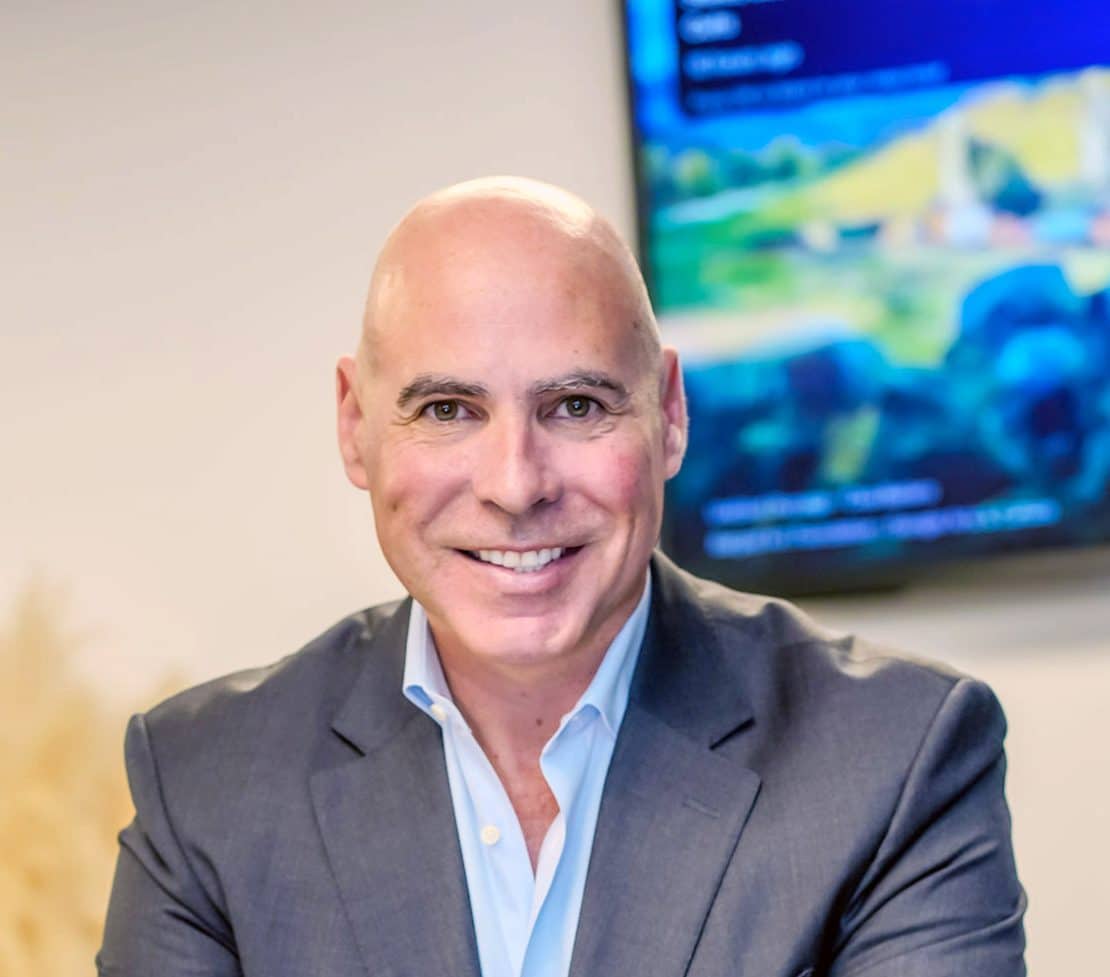
At American Healthcare REIT (AHR), Mark Foster serves as Executive Vice President, General Counsel, and Corporate Secretary, overseeing the legal function as part of a five-member executive team. He ensures law and strategy align at every level. Mark works where public markets, operations, and care delivery meet, guiding the company through growth opportunities and risks as the senior population expands in the US and the UK.
That work begins with awareness. Mark describes his role as a connector, translating business direction into structure and execution. “It’s about understanding the business objectives, selecting the appropriate structure, and overseeing outside counsel to ensure they identify and address the salient regulatory and compliance risks.”
Moving in-house
Mark started his career in private practice at a full-service law firm in California, focusing on commercial real estate and finance. As he progressed, he wondered where his path would lead. “As I matured in my career, I knew what my life would look like if I stayed at the law firm for the next 20 or 30 years,” Mark reflects. His client interactions opened his perspective. “I saw first-hand how in-house counsel could influence the intersection of business and legal strategy.”
Curiosity soon led to action. As a fifth-year associate at the law firm, “I received a call from a Toll Brothers recruiter out of the blue. I thought, if I’m going to take the leap, I might as well do it now.” Mark became California Regional Counsel at Toll Brothers. “That was my first entry into the in-house role, a key moment in my career.”
Learning the seat
At Toll Brothers, Mark worked regularly with CEO Bob Toll, a former attorney turned homebuilder magnate. The experience reshaped how Mark viewed the importance of a highly functioning in-house legal team. “Bob Toll had been a private practice attorney before he founded Toll Brothers and he valued the input of his legal team. He gave in-house lawyers seats at the table on strategic transactional matters and looked to them for candid risk assessments and solutions.”

That environment left a lasting impression. “That experience taught me how in-house lawyers can add value and contribute to the success of the business in a meaningful way. I’ve carried that lesson with me throughout my career.”
When the housing market collapsed, Mark knew he needed to pivot. He joined the Rockefeller Group during the financial crisis, shifting from homebuilding to commercial real estate development. “It was a certainly a valuable learning experience. I learned that you can’t control the macro business environment, but that you can protect yourself by remaining flexible and open to new opportunities,” Mark explains.
At the Rockefeller Group, he worked on entitlement matters and government-focused projects. “We handled government projects like a Veterans Affairs outpatient clinic,” Mark recalls. The work expanded his understanding of timing and regulatory complexity in real estate transactions. “That period broadened how I thought about long-term development projects and certainly taught me patience,” he adds.
Capital cycles and risk
His next move came through a college connection at Oaktree Capital, which was building a platform for the management of non-performing loan portfolios. “He called me and said, ‘Foster, we need a general counsel and you’d be perfect’,” Mark recalls.
At Sabal Financial Group, he oversaw the management of loan and real estate portfolios acquired with limited diligence. “We were buying large portfolios without traditional due diligence, and I frequently referred to it as a “grab bag” investment strategy.” The work meant getting comfortable with uncertainty. “You get some good assets and some bad ones, then you work through them. You see what’s in the bag and decide what to sell, what to hold, and what to reposition.”
Mark values having a seat at the decision-making table. “From the outside counsel perspective, you often receive a deal after it’s already been negotiated. You don’t see the business from start to finish.” That visibility shapes his work in-house. “As in-house counsel, you are involved from the beginning to the end and have a seat at the table throughout,” Mark says.
Creating legal value
At AHR, Mark focuses on legal operations, transaction structuring and deal efficiency. “One way legal adds value is by shaping transaction structure. How deals are structured matters.”
Tax and financing considerations play an important role early in that process. “There’s value in understanding the tax and financial implications,” Mark says, noting that legal input often affects outcomes well before documents are finalized.
He focuses on how AHR uses outside counsel. “Having been a law firm partner gives me insight into how to use outside counsel efficiently,” he says. “It helps me clarify expectations around scope, fees, and results.”
Alternative fee arrangements are part of that approach. “Developing alternative fee structures not only typically saves shareholders money, but it creates alignment between the company and law firms, one of its most important and often most expensive service providers.”
Leading legal teams
Mark’s leadership style centers on clarity and accountability. Early in his career, he documented lessons learned. “I created a list of “Do’s and Don’ts” for transactional attorneys,” he says. However, the principle behind it remains unchanged today. “Offer solutions. Don’t just identify risk. Clients value recommendations.” Context matters as well. “Understand the business purpose behind everything you do,” he says. “A $50,000 contract and a $500 million contract need different approaches.”
Mark highlights the importance of the human side of the role. “Your client is the company, but you’re working with people who you have to see every day. It’s about navigating those dynamics.” For example, advice must address the concerns of key internal stakeholders as well as the company. “The art is presenting advice (both legal and pragmatic) that best serves the company and allows the people you are working with to sleep well at night,” he says.
Early influences
There are two influences that have impacted Mark. He traces his interest in law back to childhood. “In sixth grade, two classmates had a father who was a California appellate court judge,” he says. Watching Judge Trotter left an impression. “He commanded respect while remaining thoughtful and soft-spoken.” Remembering his demeanor stayed with Mark and brought him to a career conclusion. “I thought, that’s the type of person I want to be. That’s when the idea of becoming a lawyer took hold.”
Bob Toll also left a lasting impression mark on how Mark approaches legal work. Bob highlighted the importance of clarity and brevity in communication. “He expected a separate legal memo before entering into any deal,” Mark remembers. “The focus was distilling issues down to what the business decisionmakers needed to hear.” Mark still applies that principle today. “I don’t need a 20-page memo,” he notes. “I need a one-page summary of the risks and how they’re being addressed.”
Choosing AHR
A call from a former associate general counsel at Sabal, now Chief Operating Officer, brought Mark to AHR. “He said, ‘Hey, Foster, we’re preparing to do a $2 billion REIT IPO, and I want you on the team,’” Mark remembers. Despite the uncertainty, he recognized the potential. “I sat down, thought about it, and said, ‘Wow, this is a unique opportunity,’ and took a leap of faith because no one knew if the IPO would actually happen.”
Preparation consumed the next 18 months. “We spent that time getting the company ready for the IPO, which launched on January 29, 2024, and subsequently led to the listing of our shares on the New York Stock Exchange on February 7, 2024” he says. “Our IPO price was $12.00. Today, two years later, we’re trading at $50.00 a share; a short period of tremendous success thanks to our assets, business team and constant focus on our mission of providing and facilitating quality care.”
What sustained his commitment was the sector’s alignment with inevitable trends. Above all, the mission resonated. “Our focus is always on care first for residents, helping make society better by improving the lives of seniors as they age.”
Three pillars of progress
The first pillar is defining what success looks like. He takes a holistic view, balancing company achievements with factors beyond his direct control. “Company milestones certainly matter as a measure of business success. But the legal function cannot always control the business trajectory or macro factors, so effectively addressing and mitigating risk in whatever form it arises is a sign of a successful and well-functioning legal department.”
The second pillar is team growth, which remains Mark’s top priority. “My team’s development is always a top priority,” he explains. “Even if it means they eventually move on, I want them to be well-positioned for professional fulfilment, building skills that strengthen both the company’s legal function and their long-term career objectives.”
Relationships form the third pillar. “The connections I’ve built and maintained over the past 25 years are invaluable. I don’t burn bridges; I still get calls from colleagues I worked with 20 years ago seeking advice, not soliciting transactions. Maintaining those ties is both the right thing to do and essential to long-term success, especially since you never know when you’ll need them.”
Each pillar reflects his evolving view of success. “Early in my career, it was financially driven,” he admits, recalling pay cuts to join Toll Brothers and pivot sectors. “Professional development and high-growth opportunities outweighed short-term pay. Now, I measure success by the value I bring to the company, my team, and our residents.”
Mark’s mindset positions in-house counsel for a broader impact in the corporate setting. “We’re uniquely well-suited to take ownership of emerging initiatives, like artificial intelligence,” Mark observes. “Volunteering for these roles and opportunities as they arise expands our department’s relevance while managing company risk far into the future.”
Paul Hastings advises leading healthcare real estate owners, operators, and investors as they navigate complex regulatory, transactional, and operational challenges. With deep experience across healthcare, real estate, finance, M&A, capital markets and restructuring, the firm provides integrated counsel on acquisitions, dispositions, joint ventures, financings, development, and compliance matters nationwide. Paul Hastings is proud to support innovative healthcare real estate platforms like American Healthcare REIT and leaders such as Mark Foster, whose strategic vision and execution continue to shape the evolving healthcare real estate landscape. Our cross-disciplinary approach helps clients manage risk, seize opportunity, and drive long-term value in a highly regulated and dynamic industry.