|
Getting your Trinity Audio player ready...
|
According to the 2025 iSeeCars Longest-Lasting Cars Study, Toyota reigns supreme. Toyotas have a 17.8 percent predicted chance of reaching at least 250,000 miles, almost four times the industry average.
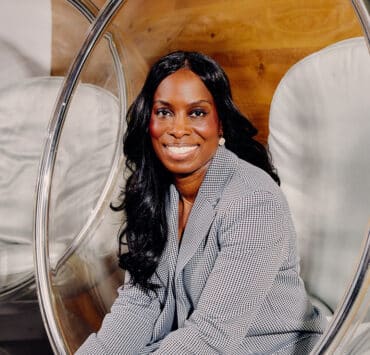
Niky Bagley hasn’t had enough time at Toyota North America to log 250,000 miles, but the current managing counsel is well on the road. It’s Bagley’s first in-house role, having built out experience in the office of the Washington State Attorney General as well as firms Buether, Joe & Carpenter and Cole Schotz.
Bagley’s early encounter with a patent attorney would ultimately encourage the Texas A&M grad to pursue law school. She earned her JD from Seattle University School of Law, graduating cum laude, and go on to earn her LLM in IP from the University of California, Berkeley.
The managing counsel had formative experience as the assistant attorney general at the Washington State Attorney General’s Office. The role offered rigorous litigation training and invaluable courtroom experience for a young attorney. But Bagley longed to return to her Texas roots.
While preparing for the Texas bar, she began a short-term contract position with Buether, Joe & Carpenter that would turn into a nine-year job. In that time, Bagley became a trusted litigator and firm member, recognized for her IP and commercial litigation chops.
The attorney would move on to Cole Schotz, widening her scope and gaining experience in higher-stakes litigation and IP matters. In 2022, she was named “Best Lawyers for Intellectual Property and Trademark Law” by Best Lawyers.
Today at Toyota, Bagley oversees a range of IP, commercial litigation, and legal matters critical to one of the most well-known vehicle manufacturers on the planet. Bagley describes her role as one that allows her to expand her areas of practice and contribute to a company renowned for innovation and quality.
Outside of her work at Toyota, Bagley is active in professional and community organizations and has participated in numerous panels and conferences on IP, like the Annual Conference on Intellectual Property Law. The attorney contributed to discussions on practical litigation strategies, case law trends, and the intersection of patent litigation and prosecution.
Additionally, Bagley was featured at the seventeenth annual Practitioners’ Think-Tank on ITC Litigation & Enforcement, hosted by the American Conference Institution in Washington, DC. The event convened leading in-house counsel, judges, and practitioners to discuss developments in Section 337 actions before the International Trade Commission. Bagley participated in key roundtable sessions developing into ITC practice, the impact of changing federal policies, and strategies for managing complex proceedings.
Bagley regulatory mentors rising attorneys and volunteers, particularly with organizations looking to increase representation in STEM and IP. Her involvement in Women in IP breakfasts and sessions devoted to diversity in innovation underlines her commitment to helping more future lawyers examine IP.
“I consider myself fortunate to work with many outstanding lawyers throughout the auto industry, and Niky is among the most highly capable and dedicated of all that I’ve had the pleasure of working with,” says Steve McKelvey, partner and leader of Nelson Mullins’ automotive law group. “She carries on the Toyota Legal Department’s very long tradition of excellence.”
A Challenging Moment for EV Manufacturers
Toyota’s robust sales momentum of late, a 13.6 percent year-over-year increase in August with a total of 225,367 vehicles sold in the US, will face a challenging year for sure. Federal electric vehicle tax credits, a vital driver for consumer adoption, have been eliminated as of September 2025, under new tax reform legislation championed by the Trump administration.
The sales spike of August was part of a broader industry rush driven by consumers seeking to purchase EVs ahead of the tax credit expiration, which provided up to $7,500 in incentives for new EV buyers. Nearly half of Toyota’s US sales this quarter are EVs, outpacing nearly every major competitor in the diversity and volume of electrified models offered. In September 2025 alone, Toyota and Lexus’ EV sales hit 45.8 percent of total US volume, with 85,092 units sold.
Analysts expect manufacturers, including Toyota, to confront stiffer competition for budget-conscious buyers without the incentive’s cost advantage. Trump’s abrupt elimination of the tax credits has created a compressed timeline for auto manufacturers to find solutions. This is further complicated by ongoing tariffs and market uncertainty, which, while creating a last-minute boom of EV purchases, create an uncertain future.
Industry observers anticipated that the loss of credits might slow the re-shoring of EV production. The now-expired credits had incentivized domestic manufacturing, a priority for the Biden administration.
Toyota’s strategic focus remains on its broad “multi-pathway” electrification strategy, offering far more hybrid and plug-in vehicles than pure battery EVs. This strategy appeals to cost-conscious buyers anxious about total value in a shifty policy climate. As federal policy shifts and the post-incentive landscape takes hold, Toyota’s well-earned reputation for a vehicle that you can put serious miles on will hopefully help offset numerous headwinds in the industry at present.